
Holiday Traditions That Have Nothing to Do with Perfection

Introduction: The Myth of The “Perfect” Holiday
Every year begins the same way. The photographs appear on social media, showing neatly arranged tables, color-coordinated décor, children smiling in matching jammies, and cookies that look like they came straight from a magazine spread. Between scrolling and comparing, a quiet pressure builds. We’ve been told that the holidays should look a specific way. Feel a particular manner. Be just right.
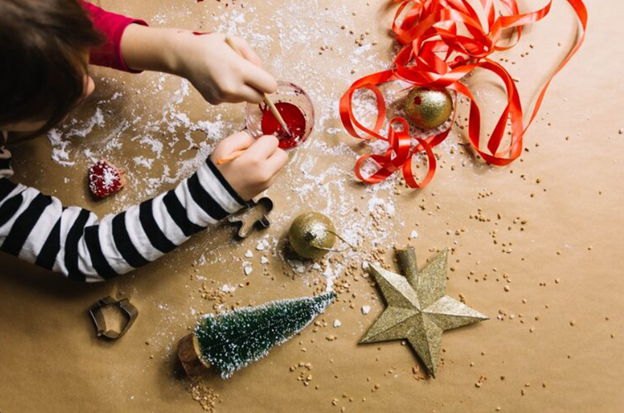
But here’s something we don’t mention often enough: most of us don’t live in those photographs. Real holidays are messy. They’re noisy kitchens. Last-minute supermarket errands. Forgotten ingredients. Tangled lights. And, schedules that never quite work out. They are naturally imperfect, which is not a flaw. That is the exact point.
The problem is not that our celebrations fall short of being perfect. It’s because we’ve been convinced that perfection was always the goal. When we remove the pressure to perform, we are left with something far more meaningful: connection, familiarity, and the satisfaction of doing things our way. And this is where the most lasting holiday traditions are quietly born.
1. The Traditions We Remember Aren’t The Polished Ones
Moments That Stick (For All the Wrong Reasons)
Think about your favourite holiday memory. It’s unlikely that everything went according to plan that year.
Everyone laughed despite the fact that the cookies had burnt. The year the electricity went out, dinner was served under candlelight. The song they sang was absolutely off-key, yet they continued to sing it every year after that.
These are the memories that stick with us because they are human. They convey passion, not polish. Children remember how they felt during holidays, not how you planned them. What adults may classify as “mistakes,” children usually perceive as magic.
When we look back, it’s rarely the perfect execution that makes us happy. Long after the party is over, the memories of the shared laughter, the twists and turns, and the tales will be passed down through subsequent generations.
2. Why “This Is How We Do It” Matters More Than Getting It Right
Claim Your Own Version of The Season
One of the most charming aspects of holiday traditions is that they do not require universal acceptance. They just require meaning within your family.
Some families hold noisy celebrations, while others keep it quiet. Some people wake up early, while others spend the entire day in their pajamas. Some people follow the same practices year after year, while others create new traditions for each season. None of these ways is more “correct” than the others.
What is important is the sense of belonging that comes when people can say, “This is how we do things.” That phrase creates identity. It teaches both children and adults that shared experiences define home, not the trends and expectations.
The holidays become less about ticking off boxes and more about recognizing the familiar, grounded, and real to the individuals who have gathered.
3. Traditions That Grow With You
When Change Isn’t a Loss, It’s a Sign of Life
There is sometimes an unspoken fear of changing traditions. We are concerned that changing them may lessen their meaning. Traditions, however, evolve as families do.
Children grow up. New members join. Circumstances shift. What once worked wonderfully may no longer fit, and that’s fine. Adaptation does not remove meaning; rather, it refreshes it.
Some of the strongest holiday traditions are those that bend without breaking. They allow for flexible schedules, new locations, and changing needs. They remind us that tradition isn’t about stopping time; it’s about continuing the connection forward even as life changes.
Allowing traditions to evolve allows them to remain relevant, rather than becoming something we hold onto out of necessity rather than joy.
4. Kids Don’t Need Perfection, They Need Presence
The Quiet Power of Showing Up
Children do not measure holidays based on their appearance. They assess them based on their level of attention.
They remember who sat next to them, who listened, and who read the same story over, even if it was already memorized. Being totally present fosters emotional safety, which acts as the foundation for meaningful holiday traditions.
Simple practices are often the most powerful: a regular bedtime story, a repeated phrase, or a shared laugh at the same time every year. These small constants provide comfort and consistency, particularly during a season of excitement and transition.
The decorations are not what kids remember. It is the experience of belonging, inclusion, and connection.
5. Letting Go of ‘Should’ and Leaning Into ‘Ours’
Releasing the Pressure to Perform
One of the most liberating things you can do over the holidays is to stop listening to “should.”
You should host.
You should decorate more.
You should do things in the same way that your family does.
But comparisons sap joy faster than nearly anything else. When we stop comparing our celebrations to others’, we reclaim the season for ourselves.
You are allowed to simplify. You are allowed to repeat what works. You are free to skip everything that does not apply. The most significant holiday traditions are there to be comforting rather than impressive.
When you determine what works for your family’s rhythm, the holidays feel less like a performance and more like a place to land.
What We Carry Long After The Season Ends
In years to come, the specifics will blur. The specific gifts, dining arrangements, and schedules will vanish. What remains are the feelings associated with the moments you shared. The holidays that we remember aren’t always perfect. They are the ones who were real. Those in which individuals felt welcomed, understood, and connected.
Holiday traditions aren’t about re-creating an image. They are about creating continuity, a thread of familiarity that goes through changing seasons and growing families.
And perhaps that is the quiet truth worth keeping onto: the best traditions do not strive for perfection. They simply turn up every year, precisely as they are, and ask us to do the same.
If you want to add a touch of warmth to your holiday traditions, “A Lone Star Christmas” by Glenn Blekicki is a great place to start. It’s the kind of narrative that encourages laughing, togetherness, and repeat readings, making it ideal for shared grins and creating memories that are completely your own.